
Garden Light Pole Height and Spacing: How to Plan Lighting for Parks, Pathways and Campuses
Written by the Surya Traders team. Category: Garden Light Pole.
A pole that is too tall throws light over the heads of walkers and into nearby windows. A pole that is too short leaves dark gaps between fittings and forces you to buy more poles than the job needs. Garden light pole height and spacing decide how a park, pathway or campus looks after dark, how comfortable it feels to walk through, and how many poles the project requires.
This guide shows how to plan both. It covers common height ranges, how spacing is worked out, how to match the layout to the space, how to control glare, and what to settle on finish, foundation and quotation details before you approach a manufacturer. It is written for landscape architects, electrical contractors, facility managers, housing societies and municipal buyers who are specifying a garden lighting pole for an outdoor project.
Quick answer: choose the height from how the space is used, let a lighting layout set the spacing, and give your manufacturer the site details in writing.
1. Why Height and Spacing Come Before Pole Selection
Height, spacing and luminaire work together as one system. Mounting height decides how far a fitting can spread its light. Spacing decides whether the light from neighbouring poles overlaps smoothly or leaves dark patches. Change one and the other must change with it.
- A taller pole reaches further, but the light arrives thinner at ground level and the risk of glare rises.
- A shorter pole gives a closer, softer pattern, but the poles must stand nearer to each other.
Garden settings also differ from roads. People walk slowly, look around, and notice the lit surface and the fitting itself. Planting, water features and seating areas all affect where light is wanted and where it is not. That is why the sequence matters: decide what people do in the space, then choose the mounting height, then work out the spacing, and only then finalise the pole design.
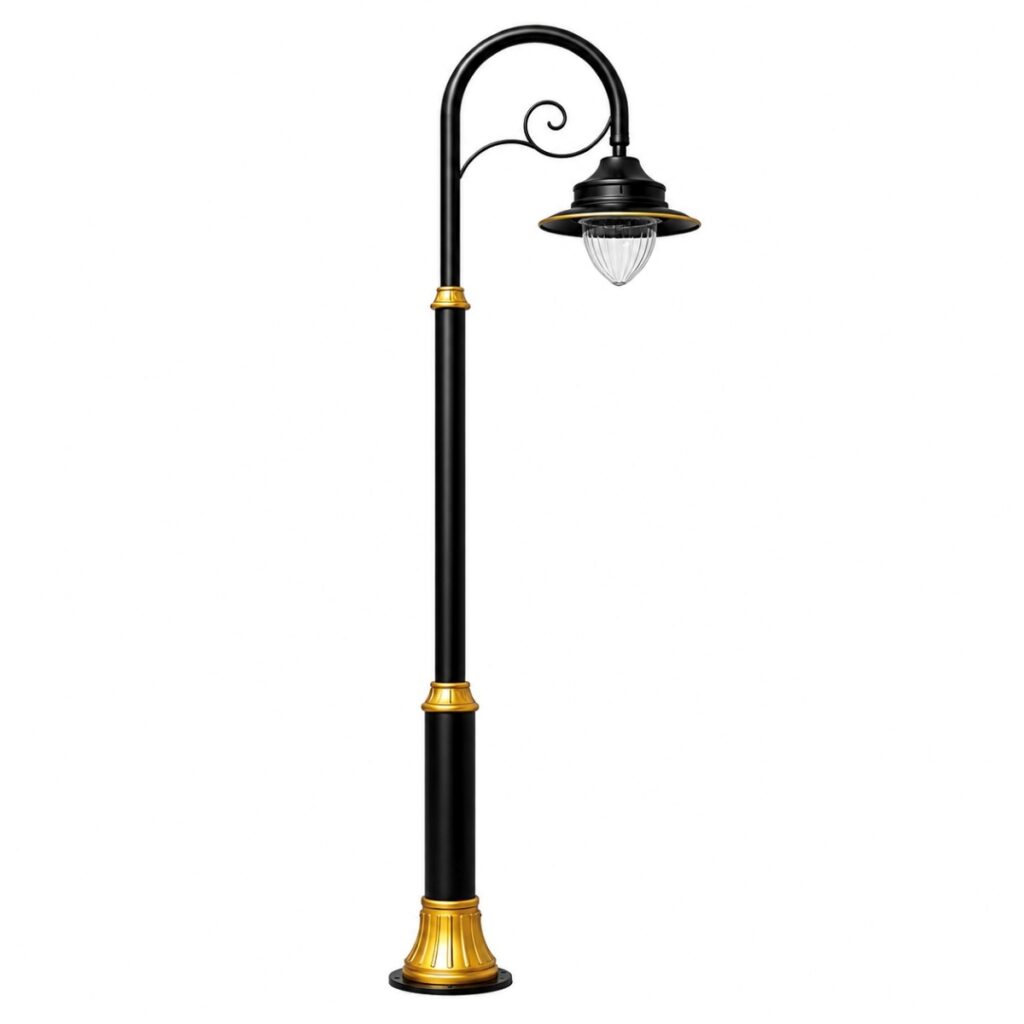
2. Common Garden Light Pole Heights and Where They Fit
The ranges below are commonly used planning bands, not fixed rules. The final height should come from the lighting design and from the pole designs your supplier actually offers.
| Mounting Height (Approx.) | Typical Use | Planning Note |
|---|---|---|
| 0.5 m to 1 m | Path edges, planting beds, steps | Guides the eye along the route but lights a small area and very little above ground. Usually used with taller poles, not instead of them. |
| 3 m to 4 m | Footpaths, small gardens, courtyards, residential compounds | Human scale. Gives a close, even pattern, with poles placed relatively near each other. |
| 4 m to 6 m | Larger parks, campus walkways, plazas, jogging tracks | Wider coverage per pole. Check glare control and the effect of tree canopy. |
| Above 6 m | Wide open areas | Normally treated as area lighting. Needs engineered load and foundation design. |
One detail causes frequent confusion. Mounting height is measured from finished ground level to the luminaire. Ask the supplier whether a quoted length is the overall pole length or the height above ground. On a pole that is planted in the ground, the buried part gives you no height. On a base-plate pole fixed to a foundation, almost the whole length stands above ground.
3. How Pole Spacing Is Planned
Spacing is the distance between neighbouring poles along a route. A common first guess for pathway lighting is a spacing of roughly three to four times the mounting height. On that basis a 4 m pole would start at about 12 m to 16 m between poles.
Treat that figure as a starting point, not a design. The real spacing depends on the factors below, and a photometric layout from the luminaire maker or a lighting designer is the reliable way to confirm it.
| Factor | How It Affects Spacing |
|---|---|
| Light distribution of the luminaire | A wider distribution can allow longer gaps. A narrow one needs poles closer together. |
| Luminaire output | Higher output reaches further, but it can also raise glare and spill. |
| Required light level | A higher target level for safety or security calls for closer poles. |
| Mounting height | A taller pole covers a wider area, but at a lower level of light on the ground. |
| Path width, bends and junctions | Curves, junctions and changes of level often need an extra pole that a straight-line rule would miss. |
| Trees and planting | Foliage blocks light and can cast shadows on the path. Mature canopy may call for different placement. |
4. Matching the Layout to Pathways, Parks and Campuses
Each type of space asks for a different arrangement. These are common approaches, and the site drawing should decide the final layout.
- Narrow footpaths: poles on one side at even intervals are usually enough. Keep the pole off the walking line.
- Wide walkways and promenades: a staggered or opposite arrangement lights both edges and avoids a bright centre with dark sides.
- Park lawns and play areas: light the edges, routes and focal points. Flooding an entire lawn wastes energy and increases light spill.
- Entrances, steps, ramps and junctions: place a pole close by, so that changes in level and direction are clearly visible.
- Campus and housing-society links: keep the same height and spacing along one route, so that the lighting looks consistent and the layout is easy to maintain.
Where a project covers several space types, group them by use and select one pole height for each group instead of mixing many heights without a reason.
5. Glare, Light Spill and Tree Growth
Glare makes a space uncomfortable and can hide what lies beyond the light. In gardens it often comes from a bright, unshielded fitting mounted at eye level or slightly above it. To reduce it, choose a luminaire that directs light down onto the path, keep the light source out of the direct line of sight, and avoid pointing fittings toward neighbouring homes. The CIE (International Commission on Illumination) publishes guidance on limiting obtrusive light from outdoor installations, and your lighting designer can apply it to your site.
Energy use also matters over the life of a garden project. LED luminaires and sensible controls help keep running costs down, and the Bureau of Energy Efficiency promotes energy-efficient lighting in India.
Finally, walk the site and think about trees. A pole that clears a young tree today may stand inside its canopy in ten years. Ask the landscape team for the expected mature size of trees near the route, and place poles with that in mind.
6. Finish and Corrosion Protection in Garden Settings
Garden poles stand on lawns, beside planting beds and often within reach of irrigation sprays, so the ground around them stays damp. Corrosion on a steel pole usually starts at the base, where water collects and soil stays wet. The finish therefore deserves as much attention as the height.
Before you place an order, settle these points with the supplier and record them in writing:
- The coating system, such as galvanizing, paint, or a combination, and the thickness of each layer
- How far the protection extends above and below ground level
- The colour and surface finish that suit the landscape
- The type of fasteners, base cover and access door, if the pole has one
- Any special condition, such as a coastal or humid location
Position poles away from direct sprinkler spray where you can. “Painted” or “galvanized” on its own is not a specification, so ask for the system and thickness to be stated.
7. Foundation, Cable Entry and Installation Planning
The foundation depends on the pole height, the weight of the luminaire and any arms, the wind exposure of the site and the soil. Open lawns can be more exposed than a sheltered courtyard. The foundation drawing should come from the pole supplier and be checked by the project engineer before work begins.
Good planning on site includes:
- Fixing the pole position on the layout drawing before excavation starts
- Using the supplier’s template for anchor bolts, where the pole has a base plate, so that the bolt positions are accurate
- Planning the underground cable route and the entry point at the pole base before the foundation is cast
- Providing earthing where the electrical design requires it
- Keeping each pole plumb during installation, so that a row of poles looks straight
- Coordinating the electrical and landscape teams, so that planting and paving do not clash with foundations or cable runs
Late changes to cable entry or foundation details are costly once concrete is cast, so confirm them early.
8. What to Prepare Before Requesting a Quotation
Send every supplier the same written enquiry, so that quotations can be compared fairly. This checklist covers the details a manufacturer needs.
| Detail to Share | Why It Matters |
|---|---|
| Site type and layout drawing | Shows whether the project is a park, pathway, campus or housing society, and where each pole stands. |
| Required mounting height | State whether it is height above ground or overall pole length. |
| Number of poles and spacing | Lets the supplier quote the quantity and check the layout. |
| Luminaire type, weight and number of arms | Affects the pole design and the foundation. |
| Pole style and colour | Keeps the appearance consistent with the landscape design. |
| Base type | Anchor-bolt base or planted pole, which changes the foundation work. |
| Coating and site environment | Defines the corrosion protection, especially in humid or coastal locations. |
| Delivery location and timeline | Needed for pricing, transport and project scheduling. |
To see the available designs for parks, gardens and pathways, visit our Garden Lighting Pole range. Projects in Madhya Pradesh can also read about our garden lighting pole manufacturing in Bhopal.
Common Planning Mistakes to Avoid
- Choosing the height from a catalogue picture instead of the use of the space
- Fixing the spacing without a lighting layout
- Ignoring how trees will grow
- Placing poles in the walking line or in sprinkler spray
- Leaving the coating and finish unspecified
- Casting foundations before the base drawing and cable entry are confirmed
Need the right lighting pole for your project?
Share your required height, pole design, arm configuration and project application with Surya Traders for a suitable quotation.
Contact Surya Traders with your site details and we will help you take the next step.
Frequently Asked Questions
1. What is a suitable garden light pole height for a park pathway?
Many park and campus pathways use poles in roughly the 3 m to 6 m range, depending on path width, luminaire and the light level required. Confirm the final height with a lighting layout.
2. How far apart should garden light poles be?
A common starting point is about three to four times the mounting height, but the luminaire distribution, light level, bends and trees can change this. A photometric layout gives the reliable answer.
3. Should garden poles be planted or fixed on a base plate?
Both approaches are used. The choice depends on the pole design, soil, luminaire weight and site exposure. Ask your supplier for the foundation drawing and have your engineer confirm it.
4. How can glare from garden lighting be reduced?
Use a luminaire that directs light down onto the path, keep the light source out of direct sight, and avoid aiming fittings toward neighbouring homes.
5. What details should I send for a garden lighting pole quotation?
Send the site layout, required mounting height, number of poles, luminaire weight and arm details, pole style and colour, base type, coating needs and delivery location.